


Why Powder Coated Aluminum Lasts Longer: 7 Reasons
Last Updated: October 31, 2026
Quick Summary
Powder coated aluminum lasts longer because the finish is a dense, fused layer rather than a thin film of liquid paint. The coating is applied as a dry powder and cured with heat into a hard shell that resists chips, sagging and moisture. Its durability depends heavily on proper pretreatment and curing.
- Powder is applied as dry, electrostatically charged particles, then baked until it bonds into a continuous film.
- Skipped or rushed pretreatment is the most common reason a finish fails early.
- Sheltered settings generally support longer finish life, while full sun mainly affects color.
- Wash furniture regularly and avoid abrasive cleaners to keep the finish intact.
- Address small chips quickly to prevent corrosion from spreading under the coating.
Table of Contents
- What Powder Coating Is and How the Process Works
- Why Aluminum Is a Strong Base for Powder Coating
- How Long Powder Coated Aluminum Lasts Outdoors
- Powder Coating vs. Paint for Aluminum Furniture
- Does Powder Coated Aluminum Rust?
- Where Powder Coating Fails and How to Prevent It
- How to Care for Powder Coated Aluminum Furniture
- Frequently Asked Questions
What Powder Coating Is and How the Process Works
Powder coated aluminum lasts longer because the finish is a dense, fused layer rather than a thin film of liquid paint.
Powder coating is a dry finishing process in which fine particles of pigmented resin are electrostatically charged, sprayed onto a metal part, and baked until they melt and bond into a continuous film.
The process has a few stages, and each one matters for durability:
- Surface preparation: the aluminum is cleaned and pretreated so the powder can bond well.
- Electrostatic application: the charged powder clings evenly to every surface, including edges and corners.
- Curing: the part is heated in an oven, which melts the powder and cross-links it into a hard finish.
Because there is no solvent to evaporate, the coating does not sag or run the way liquid paint can.
Why Aluminum Is a Strong Base for Powder Coating
Aluminum is a strong base because it is light, does not rust the way steel does, and holds a coating well when the surface is prepared correctly. Its natural oxide layer gives the finish something to grip.
The catch is that aluminum needs proper pretreatment before powder goes on. Skipping or rushing that step is the most common reason a finish fails early.
How Long Powder Coated Aluminum Lasts Outdoors
Powder coated aluminum outdoor furniture can last for years, but the exact life depends on climate, sun exposure, coating quality and how the piece is cared for. To see one in practice, you can view a powder-coated aluminum chaise lounge set.

The single most useful way to think about service life is to separate the two things a coating does: it protects the metal, and it keeps its color. Those two jobs fail on different timelines. A finish can still be protecting the aluminum long after the color has started to chalk or fade, and the reverse is rare.
Service Life by Environment and Coating Type
The environment is the biggest factor. Here is a practical guide to what affects how long the finish holds up, with rough expectations for a well-made, properly pretreated and cured polyester powder system on architectural-grade aluminum:
- Sheltered or partial-shade settings (covered porch, screened patio, mild climate): Exposure to UV and moisture is lower in these settings, which generally supports longer finish life with routine cleaning. UV load is low and moisture dries quickly.
- Hot, sunny climate with full sun exposure: Color is the first thing to go. Standard polyester powders can begin to chalk and lose gloss after several years of intense UV, while the protective barrier usually keeps holding. A UV-stable or super-durable polyester powder, often marketed as a premium exterior grade, extends color retention noticeably. Ask which powder system is specified, not just whether it is 'powder coated.'
- Coastal or salt-air areas: Airborne salt is the main aggressor. Salt residue holds moisture against the coating and, at any scratch or edge, accelerates corrosion of the aluminum underneath. Rinsing furniture regularly helps remove salt before it can do its work. Expect the barrier to need more attention here than in a mild inland climate.
Coating type also matters. Standard polyester powders are common for outdoor furniture, while premium formulas are designed for stronger UV and weather resistance. Fluoropolymer and other high-performance exterior systems are used where color retention over decades is the priority, typically on architectural metal rather than residential furniture. Ask any manufacturer which powder system and pretreatment they use, a vague answer is a signal.
What Shortens Service Life
A few factors reliably pull a finish toward the short end of its range:
- Skipped or rushed pretreatment. The most common cause of early failure. Powder bonds to a properly cleaned and conversion-coated surface; on a poorly prepared one it sits on top and eventually lifts.
- Under-curing. Powder that is not fully cured never reaches its designed hardness or adhesion, so it chips and peels sooner.
- Thin film at edges and corners. Coating naturally thins at sharp edges, which is where corrosion usually starts.
None of these are inevitable. They are the difference between a finish that meets its potential and one that fails early, and most of them are decided before the piece ever reaches your patio.
Powder Coating vs. Paint for Aluminum Furniture
Powder coating is generally regarded as more durable than liquid paint on aluminum because it forms a thicker, tougher film. Paint can still look great.
Here is how the two compare for outdoor pieces:
- Film thickness: Powder forms a thicker, more uniform layer. Paint is thinner and more prone to thin spots.
- Chip and scratch resistance: Powder is harder and holds up better to bumps from chairs and tables.
- Solvents and fumes: Powder has no solvent, so it produces far fewer volatile emissions.
A common mistake is assuming all powder finishes are equal. Quality of pretreatment and curing counts for as much as the powder itself.
7-Piece Aluminum Outdoor Dining Set with Beige Cushion →
Does Powder Coated Aluminum Rust?
Powder coated aluminum does not rust in the way iron or steel does, because aluminum does not contain iron. Aluminum can still corrode, but a sealed powder coating blocks most of the moisture and salt that cause surface corrosion.
Rust is a common worry, so it is worth being precise. The coating acts as a barrier. If that barrier is scratched deep enough to expose bare metal, corrosion can start at the damaged spot.
Where Powder Coating Fails and How to Prevent It
Powder coating fails most often at the edges, at scratches that reach bare metal, and where pretreatment was skipped. Knowing these weak points, and the mechanisms behind them, helps you spot trouble early and, just as importantly, helps you judge a piece before you buy it.
The Aluminum-Specific Failure Mechanisms
Most powder coating failures on aluminum trace back to a handful of process decisions made long before the finish is exposed to weather:
- Inadequate cleaning and pretreatment. Aluminum naturally forms an oxide layer, and powder adheres best to a surface that has been cleaned and given a conversion coating, typically a chrome-free or phosphate-based pretreatment, so the powder bonds chemically rather than just sitting on top. Skip that step and the finish can look perfect for a season or two, then lift or peel in sheets. This is the single most common cause of early failure.
- Outgassing. Aluminum castings and some extrusions can trap air or moisture that expands when the part enters the cure oven, pushing tiny craters or pinholes through the powder film. Good coaters manage this with proper pre-bake or outgassing steps. Pinholes are more than cosmetic, they are pathways for moisture.
- Under-curing. Powder must reach its specified cure schedule, both time and metal temperature, to cross-link fully. Under-cured powder is softer, less adherent and more prone to chipping. Over-curing is its own problem, embrittling the film so it cracks instead of flexing.
Reading the Warning Signs
Watch for these signals and what they usually mean:
- Bubbling or lifting: almost always poor surface prep or moisture trapped under the coating. This is a barrier failure and needs attention.
- Chalky or faded color: UV breakdown of the resin. The aluminum is likely still protected, but appearance is declining.
- Deep scratches or chips exposing bare aluminum: corrosion can start at the damaged spot. Fix small chips quickly to keep it from spreading.
Preventing Failure
Prevention is mostly about habits and about asking the right questions up front:
- Wash furniture regularly to remove dirt, pollen and salt before they hold moisture against the finish.
- Avoid dragging pieces across concrete; lift or use glides.
- Address chips before they grow, a matching touch-up kit handles small damage, while larger areas may need professional recoating.
When to Touch Up vs. When to Recoat
Larger areas of lifting, widespread chalking, or corrosion that has spread under the coating generally call for professional assessment rather than a home fix. Knowing which situation you are in saves money and prevents a small defect from becoming a structural concern.
The most common failure points and their causes are summarised below, so you can spot early warning signs.
| Problem | Cause | Fix |
|---|---|---|
| Bubbling or lifting | Poor surface prep or moisture trapped under coating | Remove and recoat; cleaning will not fix it |
| Chalky or faded color | UV breakdown of the resin | Clean and consider recoating for appearance |
| Deep scratches or chips | Bare aluminum exposed to moisture | Fix small chips quickly before corrosion spreads |
| White, powdery corrosion | Salt or trapped moisture at edges or scratches | Address the damaged spot promptly |
| Pinholes or craters | Outgassing from castings during cure | Choose a coater who manages pre-bake or outgassing |
| Chipping or cracking | Under-curing, or over-curing that embrittles the film | Ensure the coater follows the specified cure schedule |
How to Care for Powder Coated Aluminum Furniture
Caring for powder coated aluminum is simple. Rinse the furniture with mild soap and water every few weeks, dry it, and inspect it for chips once or twice a season.
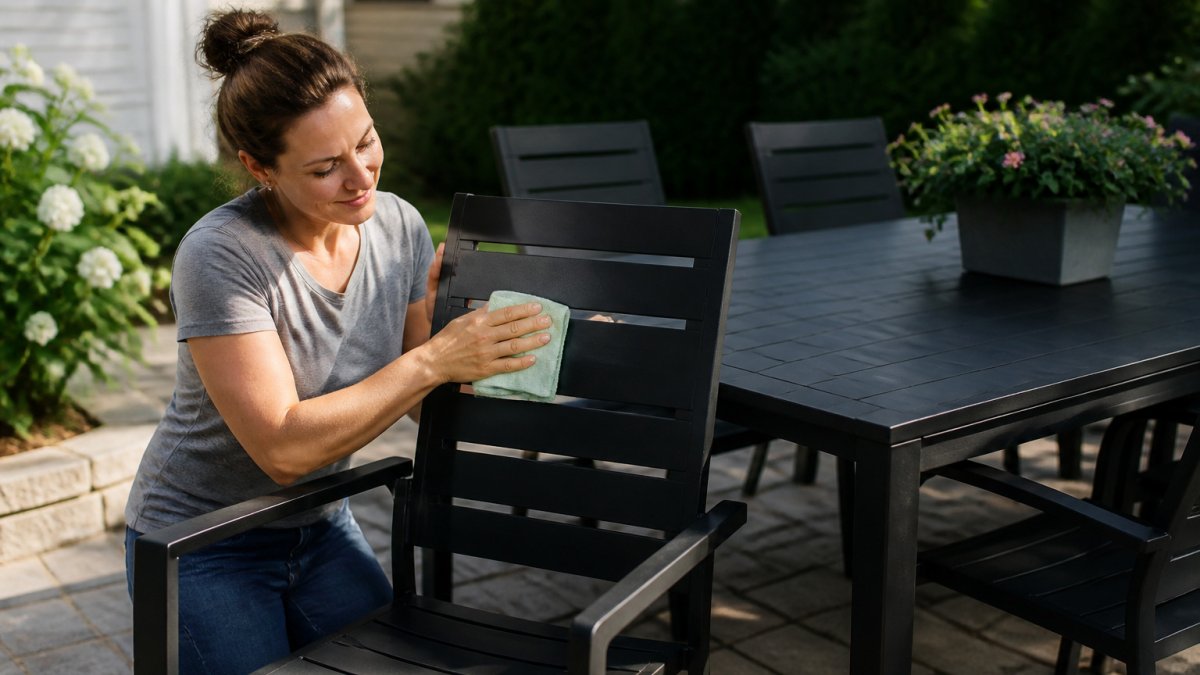
Here is a basic routine:
- Rinse off dirt, pollen and salt with a garden hose.
- Wash with a soft cloth and mild, non-abrasive soap.
- Avoid harsh chemicals, steel wool and abrasive scrubbers.
A homeowner in casual clothing wiping down a powder-coated aluminum dining chair on a sunny backyard patio shows how gentle routine care fits into everyday life.
Watch out: Abrasive cleaners and scrub pads can dull the finish and wear through the coating over time, so stick to soft cloths and mild soap.
If you want to see powder-coated aluminum in practice, browse our 7-Piece Aluminum Outdoor Dining Set with Beige Cushion, which has a durable aluminum table. For larger spaces, our Caesar 12 Ft. X 16 Ft. Dark Brown Double Roof Permanent Hardtop Aluminum Gazebo is a hardtop gazebo with netting and sidewalls.


Frequently Asked Questions
Is powder coating more durable than painting?
In most outdoor conditions, yes. Powder coating is a dry thermoset polymer that is electrostatically applied and then cured in an oven, forming a thicker, denser film than most liquid paints. That film resists chipping, scratching, and UV fading better than a typical brushed or sprayed paint layer. Because it contains no solvents, it also builds a more uniform coating without drips or runs. Paint can still perform well with proper surface prep, but powder coating generally holds its color and finish for longer on aluminum furniture exposed to sun, rain, and temperature swings.
How long will powder coated aluminum last outdoors?
Service life depends on the environment, the coating quality, and the surface preparation before coating. Under moderate outdoor exposure, a properly pretreated and cured powder coat on aluminum commonly keeps its protective and aesthetic qualities for many years, while harsh coastal air, salt spray, or intense UV can shorten that period. Regular cleaning and prompt repair of any chips help extend the finish. Ask the manufacturer for its warranty terms, since those reflect the coating system it actually used.
Does powder coated aluminum rust or corrode?
Aluminum does not rust in the way steel does, because it forms a thin oxide layer that protects the metal. Powder coating adds a further barrier that keeps moisture and salts away from the surface. Corrosion can still occur if the coating is chipped or scratched to bare metal, or if the aluminum was not properly cleaned and pretreated before coating. Inspect furniture each season, touch up any damage promptly, and rinse away salt or debris to keep the finish intact.
How do you maintain powder coated aluminum outdoor furniture?
Clean the surfaces with mild soap and water and a soft cloth or sponge, then rinse and dry. Avoid abrasive pads, harsh solvents, and strong alkaline cleaners that can dull the finish. Check for chips or scratches at least once a year and address them early. If you live near the coast, rinse off salt residue more often. Covering or storing furniture during extended wet or freezing weather also reduces wear on the coating.


