


How to Maintain Powder Coated Furniture Outdoors
Last Updated: October 29, 2026
Quick Summary
Clean powder coated furniture every month with mild dish soap and warm water, using a soft cloth rather than abrasive pads. Rinse each piece thoroughly and dry it completely to prevent water spots and mineral stains. Treat stains early, and avoid bleach, steel wool, and pressure washers held close to the surface.
- Use a few drops of mild dish soap in warm water for routine cleaning.
- Never use steel wool, wire brushes, bleach, or harsh degreasers on the finish.
- Dry every piece right away to prevent spots and mineral stains.
- Wipe hard-water marks with equal parts white vinegar and water, then rinse.
- Clean monthly, wash fully each spring and fall, and rinse after storms.
Table of Contents
- What Powder Coating Is and Why It Needs Gentle Care
- How to Clean Powder-Coated Aluminum Furniture Step by Step
- How to Remove Water Stains from Powder-Coated Aluminum
- Stain Removal by Type: Oil, Black Marks and Mineral Deposits
- How to Prevent Rust on Powder-Coated Furniture
- How Often to Clean Outdoor Furniture: A Maintenance Schedule
- Building Your Care Routine for Backyard Mosaic Pieces
- Frequently Asked Questions
What Powder Coating Is and Why It Needs Gentle Care
Powder coating is a dry finish that is applied as a fine powder and then cured with heat until it forms a hard, even skin over the metal. You can browse patio furniture sets to see this finish on complete outdoor collections.
Powder coating is tough, but it is not indestructible. The finish is a protective layer, and that layer can be scratched, dulled, or stained if it is handled roughly.
What this means for you:
- Clean with mild products, not harsh chemicals
- Rinse and dry each piece after cleaning
- Address stains early, before they set
How to Clean Powder-Coated Aluminum Furniture Step by Step
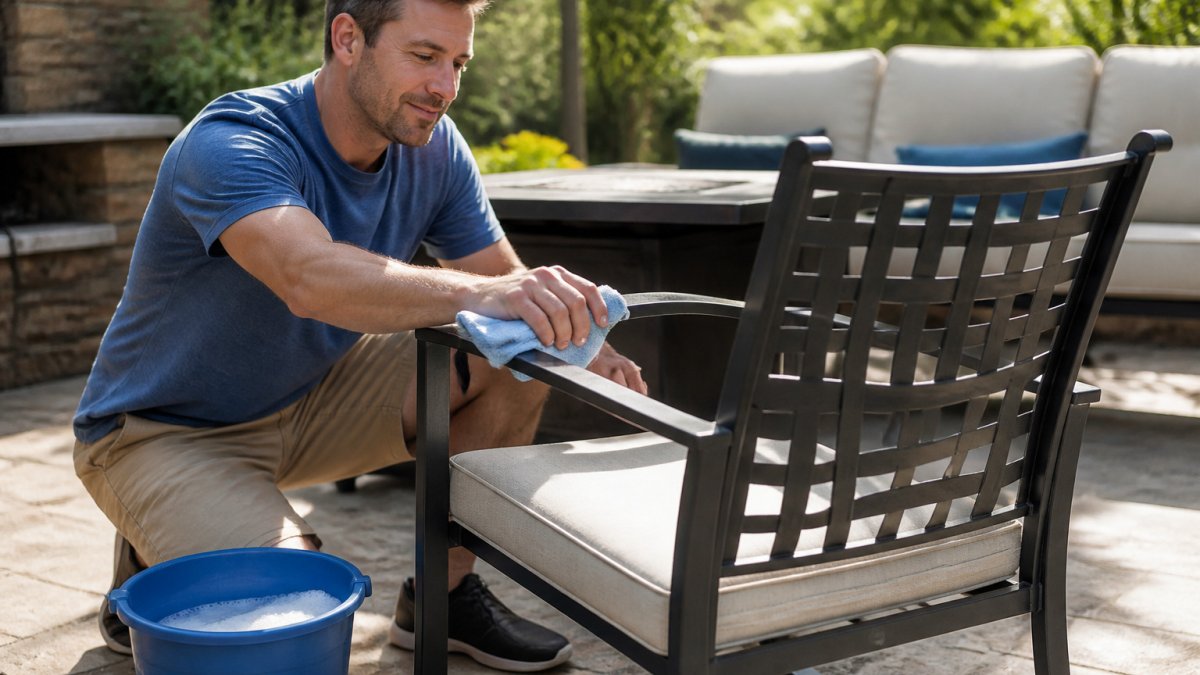
Cleaning is the foundation of good maintenance. A simple routine, done every few weeks, keeps the finish looking new. Work on one piece at a time so you can rinse and dry before moving on.
Choosing a Mild Cleaner and What to Avoid
A mild dish soap mixed with warm water is the safest cleaner for most powder coated furniture, including pieces in outdoor settings. Many homeowners use a few drops of gentle dish detergent in a bucket of warm water. This removes dirt and grime without stripping the finish.
Avoid these products and tools:
- Bleach and strong degreasers
- Steel wool, wire brushes, and scouring pads
- Abrasive powders and harsh cleaners
- Pressure washers held close to the surface
Abrasive cleaners leave tiny scratches that trap dirt and dull the finish over time. Soft cloths and sponges work better.
Rinsing and Drying Without Leaving Marks
Rinse every surface with clean water after washing. Leftover soap film can attract dirt and leave streaks. Use a hose on a gentle setting or wipe with a damp cloth.
Dry the furniture right away. Standing water is the main cause of spots and mineral stains. A soft microfiber towel works well, and letting the piece air dry in the sun finishes the job. Check joints, screws, and seams, since water often hides there.
How to Remove Water Stains from Powder-Coated Aluminum
Hard water leaves white or chalky marks, especially on furniture that sits outside in sprinkler spray or rain. These mineral deposits are common but usually easy to lift.
Wipe the area with a cloth dampened in a mix of equal parts white vinegar and water. Let it sit for a minute, then gently wipe and rinse.
Watch out: Never use vinegar on a surface that is hot from the sun.
Stain Removal by Type: Oil, Black Marks and Mineral Deposits
Most stains on powder-coated furniture fall into four families: grease and oil, black scuff marks, mineral deposits, and mildew. Each one responds to a different method, and using the wrong method is how homeowners turn a surface stain into permanent dulling or a chipped edge. Work from the gentlest approach upward, and always test on a hidden area such as the underside of a seat or the inside of a leg before treating a visible face.
Grease and Oil
Cooking grease, sunscreen, and lotions leave a dark, tacky film that attracts dust. Start with two or three drops of mild dish soap on a damp microfiber cloth and work it into the spot in small circles. Let it sit for one to two minutes, then rinse with clean water and dry. For stubborn grease, a diluted solution of one part white vinegar to three parts water can cut the film; rinse thoroughly afterward so no acidic residue remains on the coating.
Black Scuff Marks
Black marks usually come from rubber shoe soles, patio chair glides, or metal objects rubbing the finish. Most lift with a soft eraser-style sponge or a cloth dampened with mild soapy water. Rub gently in one direction rather than scrubbing back and forth. If a mark persists, a small amount of baking soda paste (three parts baking soda to one part water) applied with a soft cloth and rinsed clean will lift it without the scratching that scouring pads cause.
Mineral Deposits and Hard-Water Spots
White, chalky rings come from calcium and magnesium left behind when water evaporates. Mix equal parts white vinegar and water, dampen a cloth, and hold it on the spot for one to two minutes. Wipe gently, rinse, and dry completely. Repeat once if needed, but stop if the mark does not lift; prolonged acid contact can dull the finish. Never apply vinegar to a surface that is hot from the sun, because the liquid flashes off and can leave new marks.
Mildew and Organic Growth
Mildew appears as gray or black speckling, most often on shaded pieces or in humid climates. A diluted vinegar solution (one part vinegar to one part water) applied with a soft cloth, followed by a thorough rinse and full dry, handles light growth. For heavier mildew, use a cleaner labeled for powder-coated surfaces and follow the dwell time on the label; household bleach is not recommended because it can dull color and degrade the finish over time.
After any stain treatment, rinse the entire area with clean water and dry it with a microfiber towel, paying attention to joints and seams where residue can collect. Treat stains when you first notice them; the longer a mineral or organic stain sits, the more it bonds to the coating.
The article groups stains into four families, and each one responds to a different method.
| Stain type | Method | Avoid |
|---|---|---|
| Grease and oil | Mild dish soap on a damp cloth, 1-2 minute dwell | Solvent-based degreasers |
| Black scuff marks | Soft sponge or baking soda paste (3:1 baking soda to water) | Steel wool, wire brushes, melamine pads |
| Mineral deposits | Equal parts white vinegar and water, 1-2 minutes | Vinegar on sun-heated surfaces |
| Mildew | Diluted vinegar (1:1) or a cleaner labeled for powder coating | Household bleach |
How to Prevent Rust on Powder-Coated Furniture
Powder coating protects the metal underneath, but it is a barrier, not a guarantee. Once the film is breached by a chip, scratch, or worn edge, moisture reaches bare metal and corrosion begins. On aluminum, that shows up as white or gray pitting rather than red rust; on steel, it appears as orange-brown bloom that spreads under the coating and lifts it.
Inspect Before You Clean
Each season, run a hand along edges, welds, joints, and the bottoms of legs, where coating is thinnest and chips are most common. Look for nicks, hairline cracks, dull spots, and any place where the finish has worn through. Check fasteners and glides too, since loose hardware lets water wick into seams. If you are shopping for replacements, the powder-coated aluminum armchair is an example of a rust-resistant option.
Small-Chip Repair: When Touch-Up Is Enough
A chip smaller than a dime, with no lifting or bubbling around the edges, is a candidate for DIY touch-up. The sequence matters:
- Clean the area with mild soap and water and let it dry completely.
- Remove any loose coating flakes with a plastic scraper; do not gouge the surrounding finish.
- Lightly scuff only the bare metal with fine sandpaper (around 400 grit) to give the touch-up product a key.
- Wipe away dust with a clean cloth.
- Apply a matching touch-up paint or coating made for metal, in thin coats, allowing each to dry per the label.
- Let it cure fully before returning the piece to service.
A common pattern is that touch-up paint does not match the sheen of factory powder coating, so treat it as protection first and cosmetics second. If color match matters, order touch-up from the furniture maker when available.
When to Call a Professional Refinisher
Larger damage, lifting coating, bubbling, or rust that has crept under the finish is beyond touch-up. Those areas need the compromised coating removed, the metal treated, and a new finish applied, which usually means professional refinishing or replacement of the part. As a rule of thumb, if damage covers more than a coin-sized area, if the coating flexes or flakes when pressed, or if corrosion has stained the metal, plan for professional restoration rather than a patch.
Keep Water Moving and Metal Dry
Standing water is the enemy. After rain or cleaning, tip pieces to drain water from seats, arms, and joints, and dry seams with a towel. Avoid placing furniture where sprinklers hit it repeatedly or where water pools on the ground beneath legs. In coastal areas, salt spray accelerates corrosion; rinse pieces monthly with fresh water and dry them, and consider covers that breathe rather than trap moisture.
A simple habit ties it together: inspect when you clean, touch up small damage immediately, and store pieces dry. That routine keeps the coating doing its job and delays the day when refinishing becomes necessary.
How Often to Clean Outdoor Furniture: A Maintenance Schedule
A simple schedule keeps maintenance manageable:
- Monthly: Wipe down surfaces with mild soap and water
- Every spring and fall: Do a full wash, rinse, and inspection
- As needed: Treat stains and water marks when you spot them
- After storms or heavy use: Rinse off salt, dirt, or debris
Furniture near pools, the coast, or sprinklers may need cleaning more often.
Building Your Care Routine for Backyard Mosaic Pieces
A good routine is simple: clean gently, rinse thoroughly, dry completely, and inspect often. Powder-coated aluminum furniture stays looking its best with this kind of care, and following these steps helps it stay looking as good as it did on day one.
Start with one piece this weekend. Once the routine feels natural, add the rest of your collection. Browse our patio furniture sets and powder-coated aluminum chaise lounge to see the finish for yourself.
Frequently Asked Questions
Does powder coating last long on outdoor furniture?
Powder coating is a durable finish that resists chipping, fading and moisture far better than many paints when it is applied properly to aluminum or steel. Its lifespan on outdoor furniture depends mainly on exposure and care. Pieces kept clean, rinsed after salt or pollen exposure, and protected from harsh abrasives are better able to keep their finish. Scratches or chips should be addressed promptly to prevent corrosion at the exposed metal. For specific warranty terms, check Backyard Mosaic's website for current product details.
How do you clean powder-coated aluminum furniture?
Use warm water with a few drops of mild dish soap, apply it with a soft cloth or sponge, and wipe the surface gently. Rinse thoroughly with clean water to remove soap residue, then dry with a microfiber towel or let it air dry in the shade. Avoid abrasive scrubbers, steel wool, and harsh chemical cleaners, which can dull or scratch the finish. A soft brush works well for textured areas and crevices.
How do you remove water stains from powder-coated aluminum?
Water spots are usually mineral deposits left behind as water evaporates. Wipe the area with a cloth dampened with a mild solution of white vinegar and water, let it sit briefly, then rinse and dry completely. Test any cleaner on a hidden area first. Stubborn deposits respond best to repeated gentle wiping rather than aggressive scrubbing, which can damage the coating.
How often should you clean powder-coated outdoor furniture?
For most backyards, a light wash every four to six weeks during the active season keeps dirt and pollen from building up. Clean sooner after heavy rain, salt air exposure, or a gathering with food and drinks. Before storing furniture for winter, give it a thorough cleaning and make sure it is fully dry. Regular light cleaning is easier on the finish than occasional heavy scrubbing.


