


Are Weather Resistant Gazebos Worth the Money?
Last Updated: October 28, 2026
Quick Summary
A weather resistant gazebo for backyard use is worth the money when the frame, roof and fabric are built to handle your local weather. Aluminum frames resist rust, hardtop roofs outlast fabric in steady weather, and anchoring decides how the structure holds up in wind.
- Check the frame material, roof system and fabric separately, since each fails in a different way.
- Aluminum frames resist rust and corrosion and need little upkeep, while cedar needs periodic sealing.
- A hardtop is generally more durable than a soft-top for steady weather, though it costs more upfront.
- Listed wind ratings only mean something when they state whether the gazebo was anchored to concrete or staked to soil.
- Compare replacement part availability and warranty coverage, since they predict long-term cost better than price.
Table of Contents
- What Makes a Gazebo Weather Resistant
- Hardtop Gazebo for Backyard Use: Hardtop Versus Soft-Top
- Water-Resistant Gazebo Performance: Rain, Roofs and Ventilation
- Wind-Resistant Gazebo Stability and Anchoring
- Frame Materials, Shade and UV Protection Compared
- Gazebo Maintenance in Winter and Long-Term Ownership Costs
- Choosing Your Weather Resistant Gazebo for Your Backyard
- Frequently Asked Questions
What Makes a Gazebo Weather Resistant
Backyard Mosaic builds its gazebos around materials that hold up outdoors, and a weather resistant gazebo for backyard use is only as good as its frame, roof and fabric working together.
Weather resistance comes down to three things: the frame material, the roof system and the fabric or netting. Each fails differently, a frame rusts or loosens, a roof leaks or cracks, fabric fades or tears, so listing details matter more than headline price.
Aluminum frames are the common choice for permanent backyard structures. The Caesar 12 Ft. X 16 Ft. Dark Brown Double Roof Permanent Hardtop Aluminum Gazebo, priced at $1,953.30, uses a galvanized steel and aluminum frame with a double roof and includes netting and sidewalls. Its listing describes the frame as resistant to rust and corrosion, the main reason aluminum is preferred outdoors.

Wood frames offer a different look. The 12' X 14' Wood Gazebo at $1,249.99 uses wood posts with a galvanized steel double roof, and its listing states the frame is FSC certified cedar. Wood needs periodic sealing and inspection.

Watch out: A roof labeled "double" does not automatically mean it is waterproof. Check whether the listing names the roof material and whether it is designed for ventilation or for rain shedding, since those are different features.
Hardtop Gazebo for Backyard Use: Hardtop Versus Soft-Top
A hardtop gazebo uses a rigid roof, usually metal or polycarbonate, while a soft-top uses fabric. For steady weather, hardtop is generally more durable, though it costs more upfront.
The Hardtop Gazebo Built for Year-Round Use, 12x10 Aluminum Frame, Polycarbonate Double Roof, Mosquito Netting is priced at $729.99. Its listing describes a polycarbonate double roof for UV protection and airflow, with removable curtains and mosquito netting included.
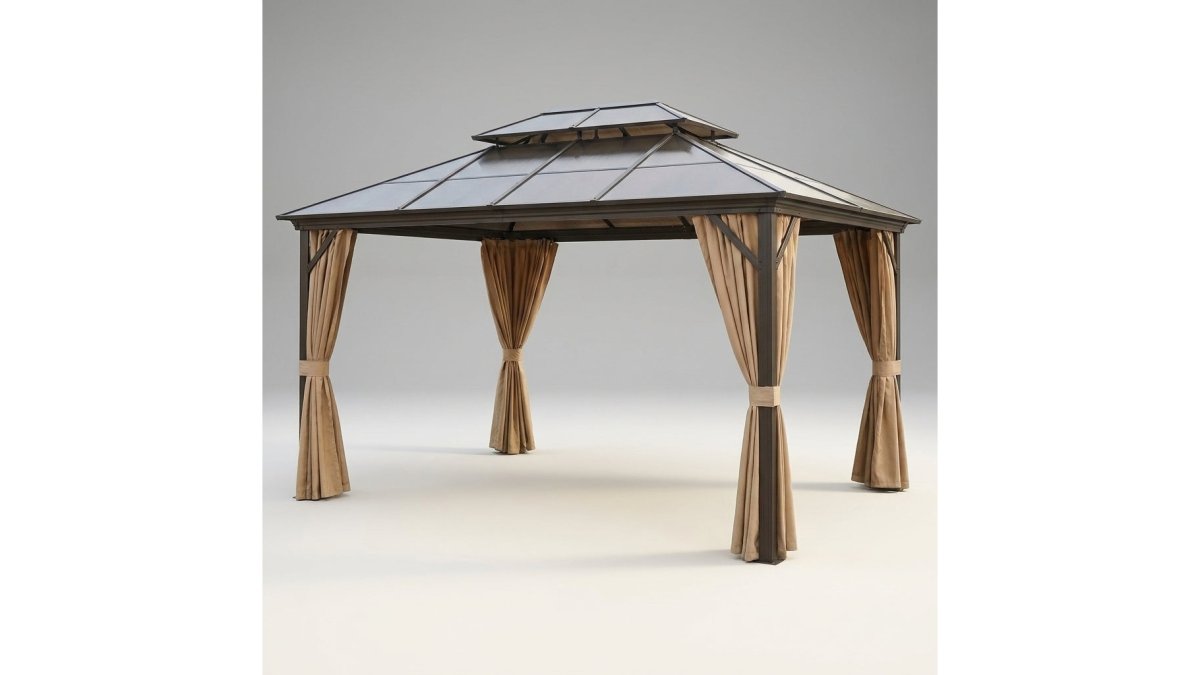
Soft-top canopies are cheaper and easier to move, but fabric wears faster under sun and wind. If you plan to leave the structure up year-round, a hardtop is the better fit.

Water-Resistant Gazebo Performance: Rain, Roofs and Ventilation
Rain protection depends on the roof, and ventilation depends on how it is built. These goals pull against each other, so look for a design that handles both.
The 11X13Ft Wood Gazebo, priced at $1,179.99, lists a galvanized iron roof with a double-layer design intended to support ventilation and withstand rain, snow and UV rays.
The Hardtop Gazebo Built for Year-Round Use lists a polycarbonate double roof with a UPF 50 rating and is described as waterproof. Polycarbonate lets light through, which can be useful for a bright lounge area but may not suit every buyer.
Ventilation matters more than many shoppers expect: a sealed roof traps heat, a vented one lets it escape. The double-roof designs here are built with that trade-off in mind.
Wind-Resistant Gazebo Stability and Anchoring
Wind is where many backyard gazebos fail, usually at the connection points, not the roof panel. Stability comes from four things working together: frame geometry, weight and mass, fastener and joint quality, and how the feet are anchored. A heavy gazebo on stakes in loose soil will move before a lighter gazebo bolted to a concrete slab.
Read wind claims carefully. Listings use phrases like "wind-resistant" and "reinforced frame" without a number. A tested rating is expressed in miles per hour and should state the test condition (anchored to concrete versus staked to soil). No figure and no anchoring condition means marketing language, not a specification.
Anchor by surface, not by habit. The right hardware depends on what the gazebo sits on:
- Concrete slab or paver patio: Use expansion anchors or wedge anchors sized to the post base, with a base plate that sits flush. This is the strongest common setup and the one most likely to match a manufacturer's tested wind rating.
- Wood deck: Use lag bolts or structural screws long enough to bite into the joists, not just the deck boards. Deck boards alone will pull up under gust loading. Confirm the deck framing can carry the point loads at each post.
- Soil or gravel: Ground stakes or auger-style anchors are the minimum, and they work best in compacted soil. In sandy or loose ground, stakes alone are unreliable; a concrete footing or a weighted base frame is the more honest solution.
- Weighted bases: Ballast plates or water-weighted feet can help on hard surfaces where drilling is not allowed, but they add mass, not holding power. They are a supplement to anchoring, not a replacement.
Storm preparation is a decision, not a chore. Owners in high-wind regions often treat every storm the same. A better approach is tiered:
- Routine gusts and thunderstorms: Close or remove curtains and netting so wind can pass through the frame instead of catching fabric like a sail, and check that all anchors are tight.
- Forecast sustained high winds: Remove soft-top canopies entirely if the structure is a soft-top, and remove sidewalls and curtains from hardtops. Fabric and netting are the first things to tear and the first things to turn a frame into a lever.
- Severe or named storms: Most manufacturers recommend partial or full disassembly of soft-top units. For hardtop units, follow the manufacturer's storm guidance and do not assume a permanent hardtop is storm-proof; panels and fasteners can still fail.
After any significant storm, inspect the post bases, anchor hardware, and roof fasteners before re-hanging curtains or netting. Loose anchors that survived one storm are more likely to fail in the next.
Caesar 12 Ft. X 16 Ft. Dark Brown Double Roof Permanent Hardtop Aluminum Gazebo →
Weight is a clue, not a guarantee. The Hardtop Gazebo Built for Year-Round Use weighs 158.95 pounds, and the 11X13Ft Wood Gazebo weighs 320 pounds.
Frame geometry matters. The 12' X 14' Wood Gazebo lists a triangular frame structure and thick wood posts for added stability, and its feet can be secured to the soil with ground stakes. Triangular bracing and corner gussets resist racking, the side-to-side distortion that wind produces.
Frame Materials, Shade and UV Protection Compared
Frame material affects durability, appearance and maintenance. Aluminum resists corrosion and needs little upkeep; wood gives a natural look but needs regular sealing; galvanized steel roofs add strength and are common in hardtop designs.
Shade and UV protection vary by roof and fabric. The Hardtop Gazebo Built for Year-Round Use lists UPF 50; the 12' X 14' Wood Gazebo lists UPF 100, with netting and curtains described as providing UV protection and privacy. Listed UPF ratings are manufacturer claims.
| Gazebo | Price | Frame | Roof | Listed UV Rating |
|---|---|---|---|---|
| Caesar 12 Ft. X 16 Ft. | $1,953.30 | Galvanized steel and aluminum | Double roof | Not listed |
| 12x10 Hardtop | $729.99 | Aluminum | Polycarbonate double roof | UPF 50 |
| 12' X 14' Wood | $1,249.99 | Cedar wood | Galvanized steel double roof | UPF 100 |
| 11X13Ft Wood | $1,179.99 | Cedar wood | Galvanized iron | UV protection (no rating) |
Gazebo Maintenance in Winter and Long-Term Ownership Costs
Winter is the real test of a weather resistant gazebo for backyard use, and long-term cost is where the cheapest listing often loses. The maintenance schedule and replacement-part math separate a structure that lasts a decade from one that needs replacing in three years.
Snow load: know the limit and the response. Snow load is expressed in pounds per square foot, and most residential hardtop gazebos are engineered for a modest figure, not a heavy-snow climate. If a listing gives no snow-load number, assume the roof is not rated for accumulated snow and plan to clear it. Practical rules:
- Clear snow before it exceeds a few inches of depth, and never let wet, heavy snow sit overnight if you can safely reach the roof.
- Use a soft plastic or foam snow rake, not a metal shovel, to avoid scratching polycarbonate or chipping painted steel.
- Do not climb on the roof. Work from the ground with an extension handle.
- After a freeze-thaw cycle, check fasteners and panel seams; ice expansion loosens hardware.
A simple seasonal calendar.
- Spring: Inspect post bases and anchors, tighten fasteners, check roof panels for cracks or loose seams, and clean gutters or roof channels if present.
- Summer: Wash the frame and roof with mild soap, inspect fabric and netting for UV fading or tears, and touch up any scratches on galvanized or painted steel before rust starts.
- Fall: Reseal wood components if the finish is dull or water no longer beads, remove or store curtains and netting if the manufacturer recommends it, and confirm anchors before storm season.
- Winter: Clear snow promptly, avoid piling snow against posts, and check for ice dams at roof edges.
Material-specific upkeep. Aluminum needs occasional cleaning and little else. Cedar needs resealing on a schedule that depends on climate and exposure; in a wet or sunny climate, plan on resealing every one to two years, and inspect for checking and rot at the post bases where moisture collects. Galvanized roofs should be inspected for scratches that expose bare metal, because that is where corrosion begins.
Total cost of ownership, not sticker price. The purchase price is only the first line. A realistic comparison adds:
- Replacement canopy or roof panels: Soft-top canopies are consumables and typically need replacement every few years depending on sun and wind exposure. Hardtop panels last longer but are not permanent; polycarbonate can yellow or crack, and steel panels can dent or rust at seams.
- Hardware and fasteners: Anchors, bolts, and brackets are inexpensive individually but add up over a decade, especially if anchors are replaced after storms.
- Sealant and finish: Cedar sealing supplies and the time to apply them are a recurring cost that aluminum avoids.
- Repair and parts availability: Before buying, confirm that replacement canopies, roof panels, netting, and curtains are sold separately and will remain available. A gazebo with no parts support becomes disposable the first time a panel fails.
- Warranty coverage: Compare what the warranty actually covers (frame versus fabric versus roof panels) and for how long. Fabric and canopy coverage is often much shorter than frame coverage, which matters most for soft-top buyers.
Ask two questions before buying any gazebo: Can I buy a replacement roof panel or canopy separately, and what does the warranty exclude? The answers predict long-term cost better than the listed price does.
The ownership math in plain terms. A lower-priced soft-top needing a new canopy every few years can cost more over a decade than a higher-priced hardtop needing only occasional cleaning and hardware checks.
Choosing Your Weather Resistant Gazebo for Your Backyard
Start with your climate: heavy rain and wind call for a sturdy roof and stable frame, while mild, dry climates give you more room on material choice. Then decide how much maintenance you want, aluminum asks for little, cedar rewards regular care.
Then match size to space. The Hardtop Gazebo Built for Year-Round Use at 12x10 suits a typical patio, the Caesar 12 Ft. X 16 Ft. gives more room for a larger group, and the 11X13Ft Wood Gazebo is designed to hold 10 to 12 people.
Compare the listed roof, frame and anchoring details against your own conditions before buying. Explore the full range of Backyard Mosaic gazebos to find the one that fits your space and your weather.
Frequently Asked Questions
What is the most weather-resistant type of gazebo?
Among the Backyard Mosaic models, the 12x10 aluminum hardtop with a polycarbonate double roof lists a waterproof rating and UPF 50 protection, and the 12 x 14 wood gazebo lists waterproof and UPF 100 ratings. Compare the listed specifications directly.
Are hardtop gazebos better than soft-top gazebos?
Hardtop models from Backyard Mosaic include the Caesar 12 Ft. X 16 Ft. Dark Brown model at $1,953.30.
Can a gazebo stay up in high winds?
Some Backyard Mosaic models include ground stakes or feet that can be secured to the soil.
Are gazebos waterproof or just water-resistant?
Check the listed water resistance level on the spec sheet.


